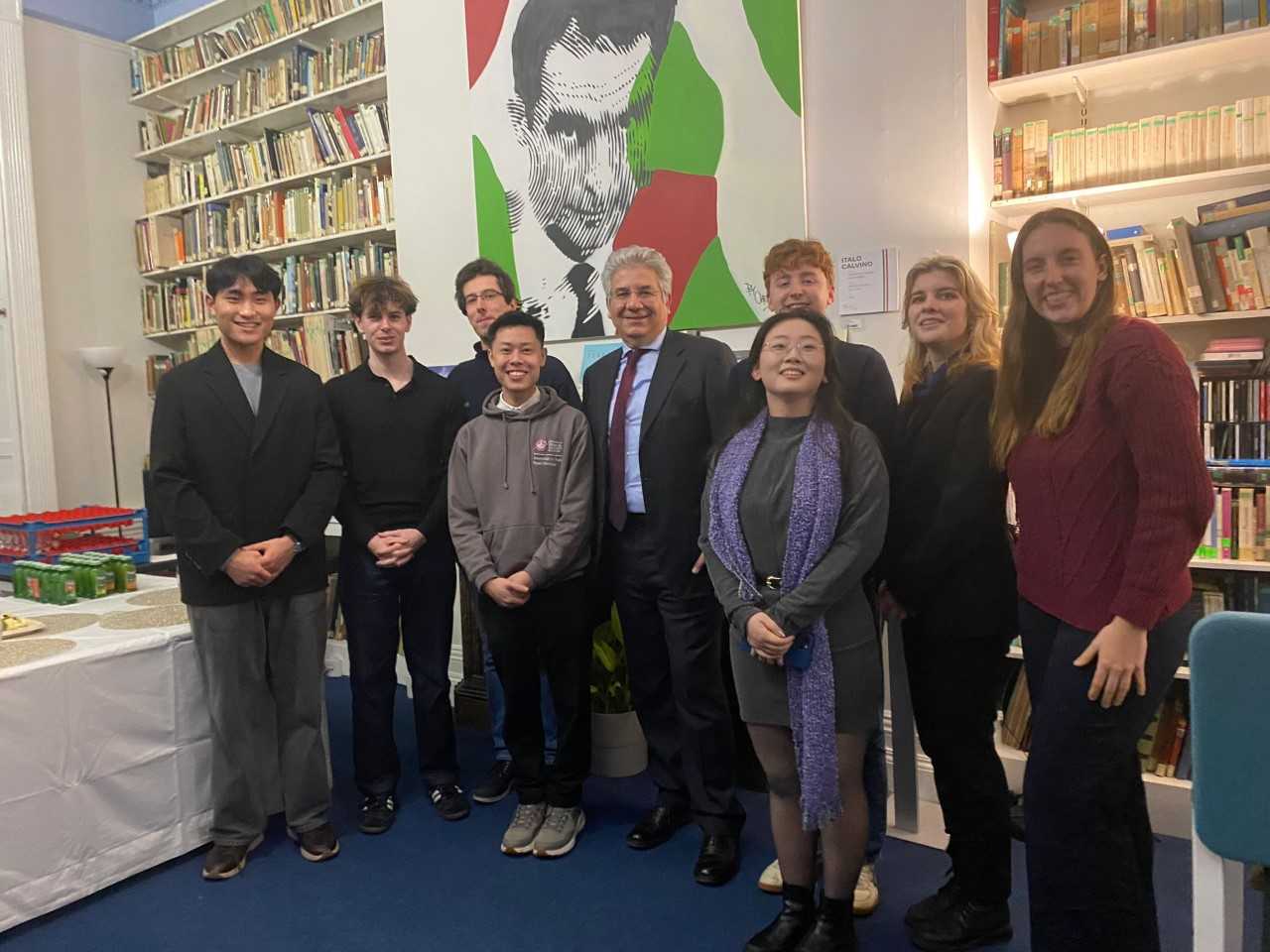
Training initiative in Dublin on climate and environmental issues.
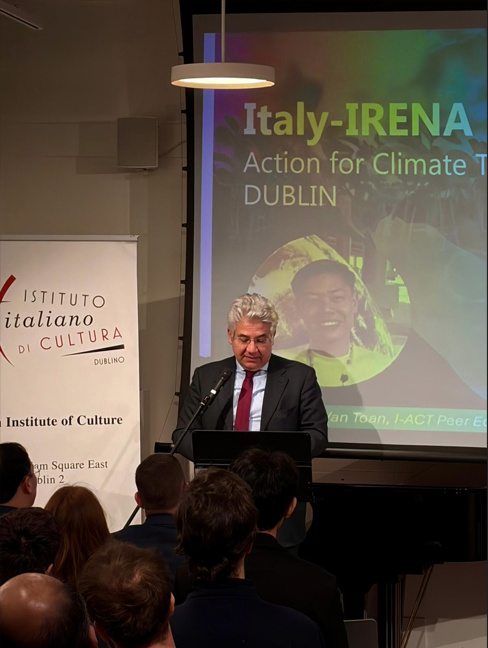
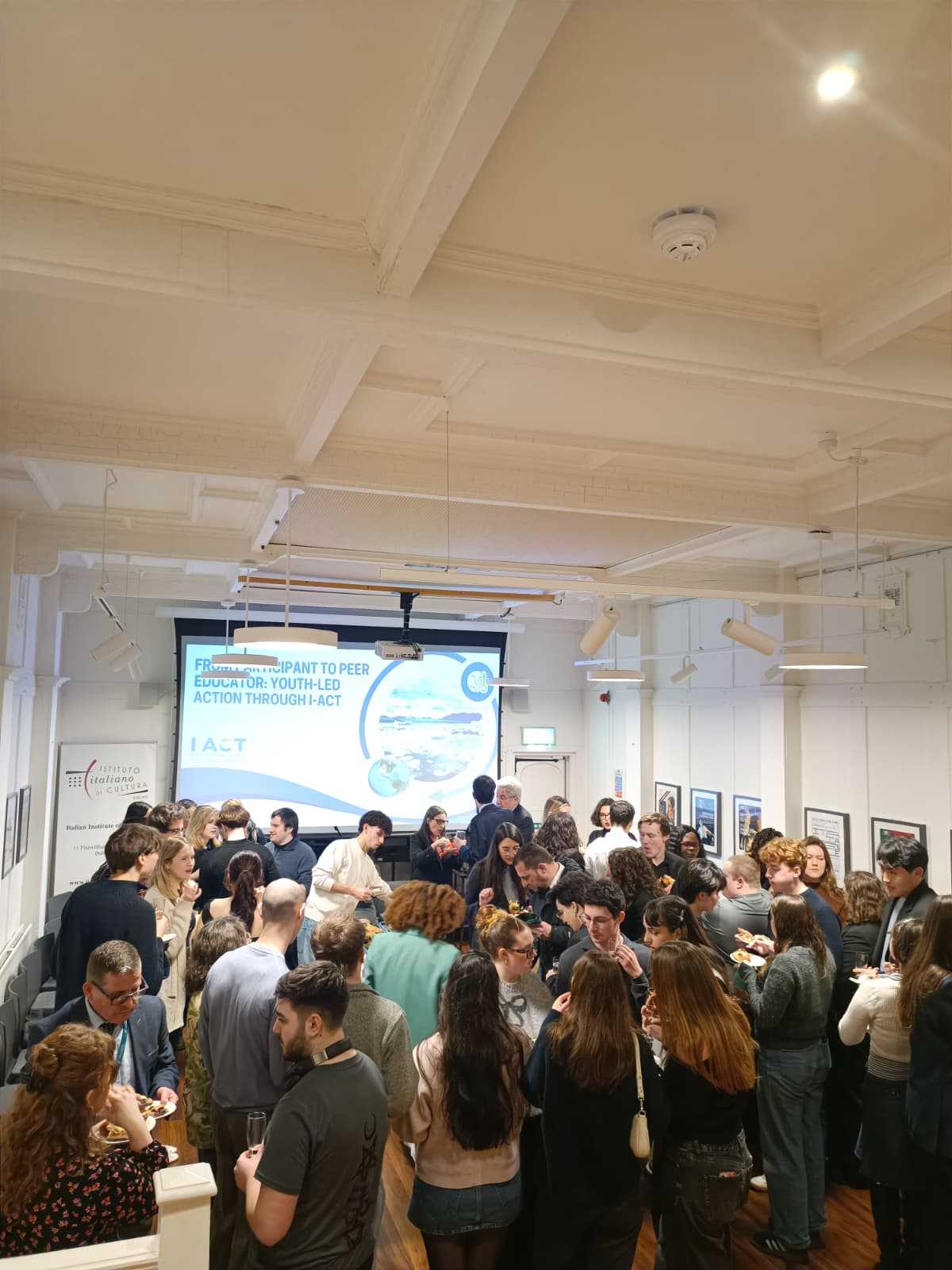
The Italy–IRENA Action for Climate Toolkit (I-ACT) event took place at the Italian Institute of Culture (IIC) in Dublin on 3rd February last. The initiative was organised by the Embassy of Italy and the IIC with the aim of strengthening the knowledge and training capacity of young international leaders engaged in energy transition, climate change, and sustainable development, through a peer-to-peer training methodology, in cooperation with the Society for International Affairs (SOFIA) of Trinity College. For this second edition, the I-ACT educator selected for Ireland was Nguyen Van Toan, a young student in Management & Sustainability at the University of Galway. The event opened with welcoming remarks by the Director of the Italian Institute of Culture, Michela Magrì, who highlighted the close link between young people, culture, and the future. The Ambassador of Italy, Nicola Faganello, then took the floor, focusing on how environmental education and the engagement of young people in collective efforts to address climate change are a priority for Italy. The Assistant Principal of the Citizen Engagement Team at the Irish Department of Climate, Energy and the Environment, Paul Heffernan, while congratulating the organisers on the I-ACT initiative, recalled the many initiatives promoted by the Irish Government in this field. During his interactive lecture, I-ACT educator Nguyen Van Toan retraced his personal experience and developed his presentation entitled “From Participant to Peer Education: How Young People Can Lead Climate and Energy Action through I-ACT”, also focusing on the employment potential of the green sector for young people. The meeting and training event was also attended by the Ambassador of the Socialist Republic of Viet Nam to Ireland, H.E. Mr. Pham Toan Thang, and brought together numerous young participants from various Irish universities, as well as representatives of local civil society.